Quick Answer
AI now handles much of the mechanics of Google and Facebook advertising: matching ads to searches, setting bids, choosing placements, and generating creative through systems like Google’s AI Max and Meta’s Advantage+. Ads are also starting to appear inside AI experiences such as Google’s AI Overviews. What has not changed: your goals, conversion data, creative, and follow-up still have a major influence on whether that automation produces useful business results.
What Is AI Actually Doing Inside Google and Facebook Ads?
More of the day-to-day decisions than most business owners realize. On Google, AI Max for Search is a suite of features layered onto Search campaigns: search term matching extends your ads to relevant searches beyond your keyword list, text customization generates ad copy variations, and final URL expansion routes searchers to the page Google’s systems judge most relevant. Performance Max campaigns go further, optimizing delivery across Google’s whole network from a set of goals and assets. On the Meta side, Advantage+ campaign types automate audience and placement decisions for sales and leads objectives, and Advantage+ creative tools generate and enhance ad assets, from text variations and new image backgrounds to turning static images into video. Meta’s own documentation notes that some creative enhancements may be turned on by default, and that advertisers can turn them off at any time, which is worth knowing before assuming your ads look exactly as you uploaded them.
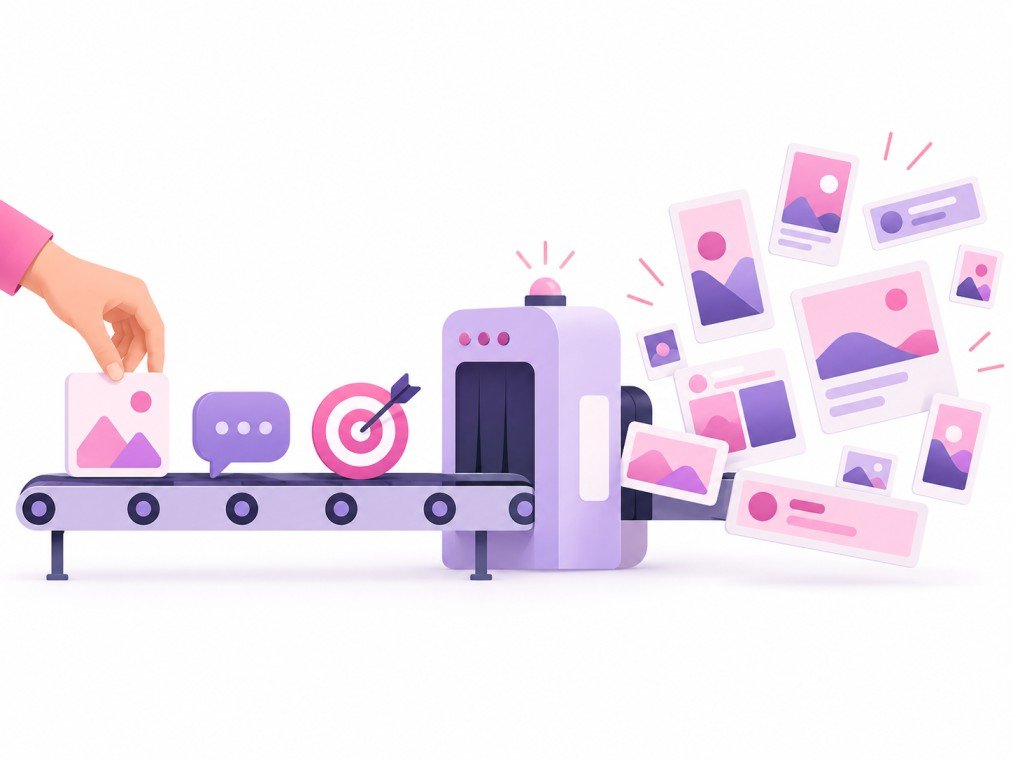
The common thread: you supply goals, budgets, assets, and data; the platforms’ AI increasingly decides who sees what, where, and at what price. Meta’s leadership has publicly described an ambition to automate campaign creation even further over time. The steering wheel has moved, which makes what you feed these systems, covered below, the part that deserves your attention.
What’s Changing With Google’s AI Max in September 2026?
This month, some Google Ads accounts are being upgraded automatically, and the details matter. According to Google’s own announcement (updated June 2026), AI Max is now out of beta, and Search campaigns using automatically created assets or the campaign-level broad match setting are automatically upgraded to AI Max
starting in September 2026, with those upgrades expected to conclude by the end of the month. Google configures the upgraded campaigns to mirror your legacy setup: automatically-created-assets campaigns get search term matching and text customization enabled by default, and campaign-level broad match campaigns get search term matching enabled by default. Google says accounts receive notifications before the transition.

One important correction to what you may have read elsewhere: Dynamic Search Ads are not part of the September wave. Google extended that timeline, and DSA sunset and auto-upgrades now begin in February 2027. Google also emphasizes that advertisers can upgrade voluntarily first to keep full control of the setup, and that AI Max ships with controls, including brand controls, location controls, and text guidelines, for steering what the AI does. If your account uses any of these legacy features, the practical to-do list is short: watch for Google’s notifications, review which AI Max features are enabled after the upgrade, check that brand and location controls match your business, and compare performance against your pre-upgrade baseline. Notably, none of this removes keywords from Google Ads; your keywords remain, and AI Max expands matching beyond them rather than replacing them.
Are Ads Showing Up Inside AI Search Results Now?
They are beginning to, and this is a different thing from AI running your campaigns. Google has introduced ad formats for its AI search experiences, with ads appearing in and around AI Overviews and rolling out in AI Mode, and Google has said it will continue testing these formats. Two details keep expectations realistic. First, availability varies by market and format, so not every advertiser or search sees these placements today. Second, Google does not sell these surfaces as a separately bid placement; eligibility flows through campaign types such as Performance Max, AI Max, Shopping, and broad match. In other words, advertisers use eligible campaign infrastructure, while Google’s systems determine when eligible ads may appear within these AI experiences. Microsoft is moving the same direction on a smaller scale, building sponsored placements into Copilot conversations alongside its network, something we touched on in our Microsoft Advertising guide.
One boundary worth drawing clearly: paying to appear inside AI experiences is not the same as being cited organically in AI answers. Earning unpaid visibility in AI-generated responses is its own discipline, and one we will cover separately.
Does AI Automatically Make Ads Perform Better?
No. Platform automation can improve specific outcomes in specific configurations, but the vendors’ own numbers come with scope worth reading. Google, for example, reports that AI Max for Search campaigns see an average of 7% more conversions or conversion value at a similar CPA or ROAS when using the full feature suite compared to search term matching alone, a figure from Google’s internal 2026 data for non-retail advertisers. That is Google’s claim, about one comparison, on Google’s measurement, and an average that contains wide variance; it is not a promise that turning on AI features improves any particular account.

The deeper reason automation is not automatic improvement: these systems optimize toward the signals and goals you give them. Configure the goal as “any form fill” and the AI will cheerfully find cheap form fills, whether or not they become customers. Feed it conversion data that misses phone calls or booked jobs and it learns from an incomplete picture. Automated systems optimize toward the goals and signals they receive, so inaccurate or incomplete conversion data can steer optimization toward outcomes that do not reflect actual business value. That is why the businesses getting the most from AI features are usually the ones with the cleanest conversion tracking, honest goal definitions, exclusions for the customers they do not want, and someone watching whether “conversions” are turning into revenue. That oversight layer, goals, guardrails, and measurement tied to real outcomes, is exactly what NextEra’s digital advertising management provides around AI-driven campaigns.
How Should a Local Business Prepare Its Ads for AI?
Strengthen the inputs the AI works from, because those are now the competitive surface. Four areas deserve particular attention. First, conversion tracking that reports real business outcomes, calls, booked appointments, and sales, back to the platforms, so their systems optimize toward customers instead of clicks. Second, creative worth generating from: authentic photos, reviews, offers, and a clear message, since automated systems assemble and test variations of whatever you provide, and AI-generated variations still need your review for factual accuracy, brand consistency, correct pricing and offers, and anything compliance-sensitive before they run. Third, complete and accurate business data everywhere the systems read it, from your website to your Google Business Profile. Fourth, follow-up fast enough to catch the leads automation delivers, because no platform AI answers your phone; connected follow-up systems like NextEra’s Never Miss a Lead setup close that last gap.
This is also the pattern behind Google folding Local Services Ads into Performance Max this fall, part of the same consolidation of campaign management into AI-driven systems we covered in our Local Services Ads guide. Across major advertising platforms, the broader direction is toward more automation, increasing the importance of data quality, creative, measurement, and business operations. NextEra Marketing, a full-service, women-owned agency based in the Oklahoma City metro, builds those foundations first so the automation has something worth optimizing.
Frequently Asked Questions
Q: Should I turn on Google’s AI Max? A: If your campaigns use automatically created assets or campaign-level broad match, the decision is being made for you: those campaigns auto-upgrade to AI Max starting September 2026. Upgrading voluntarily first preserves more control over the initial setup. Either way, review which features are enabled, set brand and location controls, and judge results against your own pre-upgrade baseline rather than assuming the change helps or hurts.
Q: Will AI replace keywords in Google Ads? A: No. Keywords remain part of Search campaigns. AI Max’s search term matching expands your reach to relevant searches beyond your keyword list; it works alongside your keywords rather than replacing them, and Google provides controls, including brand and location controls, to constrain that expansion. The practical change is that matching and bidding decisions are increasingly automated, while keywords remain one of the inputs advertisers can use to guide Search campaigns.
Q: Should I use AI-generated ad creative? A: It can be a real time-saver for producing variations, and platforms increasingly test generated versions of your assets automatically, sometimes by default. Treat generated text, images, and video as drafts: review them for factual accuracy, brand consistency, correct pricing and offers, visual errors, and compliance issues before they run. AI creative is not inherently better or worse than human creative; unreviewed creative is the risk.
Q: Do ads appear in Google’s AI Overviews? A: Yes, Google has begun showing ads in and around AI Overviews and is rolling out ads in AI Mode, with availability varying by market as Google continues testing formats. There is no separate placement to buy; eligibility flows through campaign types such as Performance Max, AI Max, Shopping, and broad match. Appearing organically inside AI answers is a separate topic from these paid placements.
Q: Do I still need someone managing my ads if AI runs them? A: The work has shifted, not disappeared. Platforms now handle much of the targeting, bidding, and assembly, but someone still has to define goals that reflect real business value, maintain accurate conversion tracking, set exclusions and guardrails, review generated creative, watch for wasted spend, and decide where budget belongs across channels. Automation executes; it does not supervise itself.
Put the AI to Work Without Handing It the Keys
If you are not sure what Google and Meta’s automation is currently doing inside your ad account, or what September’s changes mean for your campaigns, that is worth a look before the platforms decide for you. Reach out to NextEra Marketing and we can review your setup, your tracking, and your goals together. A conversation, not a commitment.