Quick Answer
Yes. SMS marketing and missed-call text-back both use text messages, but they solve different problems. SMS marketing is proactive: a business sends promotional, educational, reminder, or retention messages to people who have agreed to receive them. Missed-call text-back is reactive: it automatically replies after someone calls the business and the call goes unanswered. One is an ongoing marketing channel. The other is a lead-response tool.
What Is the Difference Between SMS Marketing and Missed-Call Text-Back?
The easiest way to separate them is by the event that starts the message.
SMS marketing begins with the business. A customer or prospect has joined a text list or otherwise provided the permission required for that messaging use case, and the business sends a message later. That might be a seasonal promotion, appointment reminder, service reminder, event notice, product update, or reactivation offer.
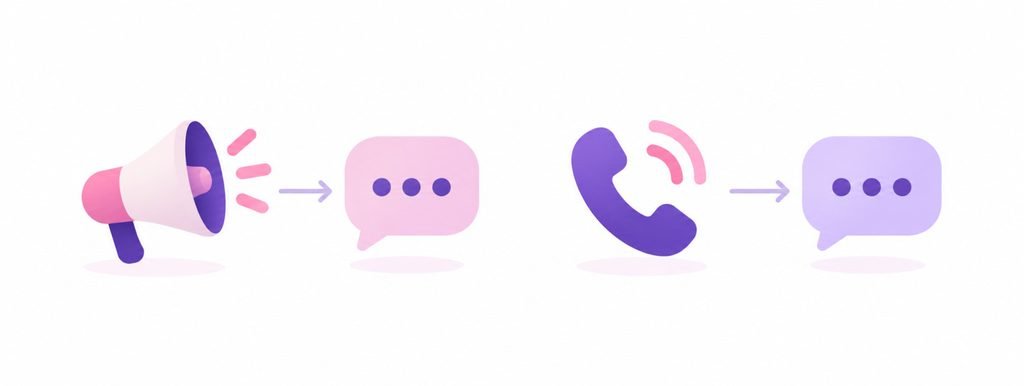
Missed-call text-back begins with the customer. Someone calls the business, nobody answers, and the system sends an immediate reply acknowledging the missed call and opening a text conversation. Our guide to missed-call text-back covers that workflow in detail. It is designed to recover a live lead that may otherwise call the next company on the list.
The tools can overlap. The same CRM or messaging platform may handle both functions, and both can use the same business phone number. But that does not make them interchangeable. The trigger, audience, purpose, consent history, and way you measure success are different.
When Does SMS Marketing Make Sense for a Small Business?
SMS is most useful when the message benefits from being short and timely. Appointment reminders, limited-time promotions, service reminders, event updates, back-in-stock notices, and simple reactivation messages all fit the format because the recipient can understand the point in a few seconds.
It also works well for businesses with repeat customer relationships. A plumbing company might send a seasonal maintenance reminder. A dental office might send appointment or recall messages. A restaurant might notify opted-in customers about a special. A retailer might announce a restock. The common thread is that the recipient already has a relationship with the business or deliberately joined the messaging list.
SMS is less useful when the message needs context, several paragraphs of explanation, multiple links, or visual storytelling. That is where email usually fits better. In our guide on whether email marketing is still worth it, we explain why email is better suited to longer education, nurture, and content people may want to return to later.
A good rule is simple: use SMS when speed and brevity matter. Use email when depth matters. Use missed-call text-back when the customer has already raised their hand by calling and needs a fast response.
Is SMS Marketing Just Another Form of Automation?
It can be automated, but automation is the delivery mechanism, not the strategy.
A useful SMS program starts with a reason to send the message. A customer reaches a milestone, an appointment is approaching, a seasonal service is due, a promotion starts, or a customer has been inactive for a defined period. Automation can then send the right message at the right time without someone manually working through a contact list.
The danger is automating messages simply because the software makes it easy. A business that sends too often, repeats the same offer, or treats every customer the same can turn a useful channel into noise quickly. The goal is not to send more texts. It is to send fewer messages with clearer reasons.
This is where a CRM becomes useful. It can separate customers by service, purchase history, stage, location, or last interaction, then trigger messages based on those details. SMS becomes more effective when it is connected to customer data instead of being treated like a giant group text.
What Consent and Registration Rules Should a Business Know?
Text messaging is a permission-based channel, and businesses should treat consent as a core part of setup rather than a box to check later. CTIA’s messaging guidance emphasizes consumer choice, consent before non-consumer messaging, and a clear way to opt out. The FCC also regulates certain robocalls and robotexts under the Telephone Consumer Protection Act, including consent and revocation requirements that can apply to marketing texts depending on how the messages are sent.
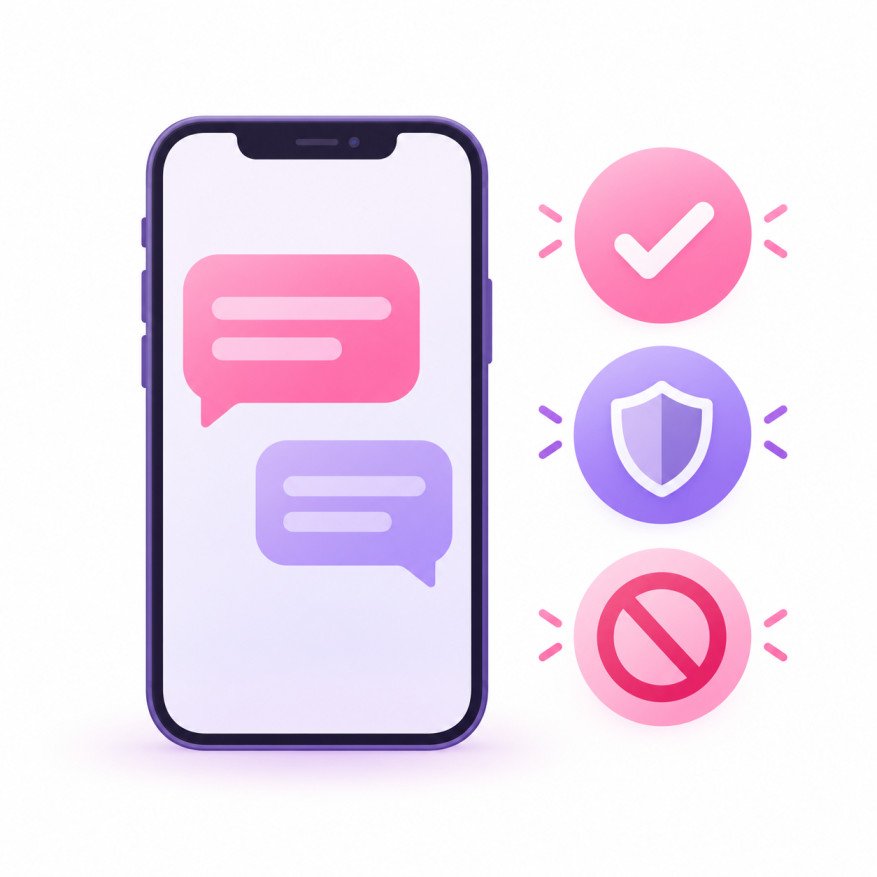
The practical takeaway is not to assume that having someone’s phone number automatically means you can add that person to a recurring promotional text campaign. The consent required can depend on the message type, technology, and circumstances. Businesses should document how people opt in, identify themselves clearly, provide an easy opt-out, and honor requests to stop. For campaigns with legal or industry-specific complexity, have qualified counsel review the setup rather than relying on a marketing article as legal advice.
There is also a carrier-registration layer. In the United States, business application-to-person messaging sent over standard 10-digit long-code numbers generally uses the A2P 10DLC framework. Messaging providers typically ask businesses to register their brand, describe the campaign or use case, explain how people opt in and out, and associate the sending numbers with that approved campaign. Requirements and review processes vary by provider and messaging route, so registration should be part of implementation planning rather than an afterthought.
None of this means SMS is too complicated for a small business. It means the channel works best when permission, registration, and customer expectations are designed into the system from the beginning.
How Should You Measure Whether SMS Marketing Is Working?
Start with business outcomes, not just delivery statistics. Delivery rate matters because a message that never arrives cannot perform, and opt-out rate matters because rising unsubscribes can signal that frequency or relevance is off. Clicks and replies are useful when the message asks for an action. But the most important metrics are usually appointments booked, purchases, reactivated customers, completed forms, phone calls, and revenue tied to the campaign.
The goal also changes by message type. An appointment reminder may be successful if it reduces no-shows. A reactivation campaign may be judged by how many inactive customers book again. A promotion may be judged by purchases or redeemed offers. A missed-call text-back flow is measured differently again, by how many unanswered calls turn into conversations, qualified leads, or booked work.
Do not compare every SMS message to the same benchmark. A reminder, promotion, and lead-recovery message serve different purposes. Compare each workflow against its own history and the business outcome it is meant to improve.
Google Search Console also shows NextEra beginning to appear for commercial SMS-related searches, including “sms marketing agency oklahoma city” and “email and sms marketing oklahoma city.” That is useful directional evidence that people are searching for the service locally, but it does not tell us whether any individual business should use SMS. That decision still comes down to the customer relationship, permission, message type, and measurable business value.
Frequently Asked Questions
Q: Is SMS marketing the same as missed-call text-back? A: No. SMS marketing is proactive outreach to an audience that has agreed to receive messages. Missed-call text-back is a reactive automated reply triggered when someone calls and the business does not answer. They may run through the same platform, but they serve different parts of the customer journey.
Q: Can I text customers just because they gave me their phone number? A: Do not assume that providing a phone number automatically authorizes recurring promotional texts. Consent requirements depend on the message type and how the messages are sent. Build clear opt-in and opt-out processes into the program and get legal guidance when the use case is complex.
Q: What is A2P 10DLC? A: A2P 10DLC is the U.S. carrier framework for application-to-person business messaging sent through standard 10-digit long-code phone numbers. Businesses typically register their identity and messaging use case through their provider so carriers know who is sending the messages and why.
Q: How often should a small business send marketing texts? A: There is no universal schedule. Send when there is a useful, timely reason, and watch replies, conversions, and opt-outs for signs that the frequency is helping or becoming intrusive. A business with frequent appointments may have more legitimate messaging moments than one whose customers purchase once every several years.
Q: Should a small business use email or SMS marketing? A: Often both, for different jobs. SMS is better for short, time-sensitive communication. Email is better for longer explanations, education, newsletters, and content people may want to revisit. The best mix depends on what customers agreed to receive and what type of message you need to send.
Use Texting for the Right Moment
SMS can be a strong customer communication channel, but it works best when the message has a clear reason, the recipient expects it, and the system connects the response to the rest of the customer journey. NextEra Marketing can help businesses connect SMS, email, CRM, lead follow-up, and automation so each tool has a defined job instead of becoming another disconnected platform. A conversation, not a pitch.