Quick Answer
Yes, for many small businesses, email marketing is still worth using in 2026. It gives you a direct way to reach people who already know your business, costs relatively little to send once the system is set up, and works especially well for follow-up, repeat business, reminders, offers, and long decision cycles. The catch is that a useful email program depends on a permission-based list, relevant messages, reliable deliverability, and tracking beyond opens.
Why Is Email Marketing Still Useful When Social Media and Ads Exist?
Email does a different job from paid ads or social media. Ads are usually better at finding new people. Social platforms are useful for awareness and ongoing visibility. Email is strongest once someone has already raised their hand by becoming a customer, requesting information, booking, buying, or deliberately subscribing.
That matters because you are not paying an ad platform every time you want to reach the same person again. You still have software and labor costs, but an existing email list becomes a reusable audience you can contact directly. For a local service business, that might mean seasonal reminders, maintenance notices, reactivation offers, review requests, or useful advice between purchases. For a professional service, it may mean staying visible during a longer decision cycle until the prospect is ready to act.
Email is not a replacement for new-customer acquisition. A business with no traffic, no leads, and no customer database cannot email its way into visibility. Paid search, social advertising, local search, referrals, and other channels still have to create demand and bring people in. Email is what helps you keep more value from the attention and leads you already earned. If your ads are bringing in contacts but too few are becoming customers, our guide on why ads are not converting is a useful place to diagnose the earlier parts of that funnel.
What Makes an Email List Valuable?
List quality matters more than list size. A few hundred people who actually know your business and agreed to hear from you can be more useful than thousands of addresses collected with little context. The strongest lists usually grow from real customer relationships: website forms, quote requests, purchases, appointments, events, account signups, and explicit newsletter subscriptions.
Buying lists is the opposite approach. Those recipients did not ask to hear from you, which raises the risk of complaints, poor engagement, and deliverability problems. It also gives you very little information about whether the people on the list are genuine prospects. A large list can look impressive in a dashboard while producing almost no business value.
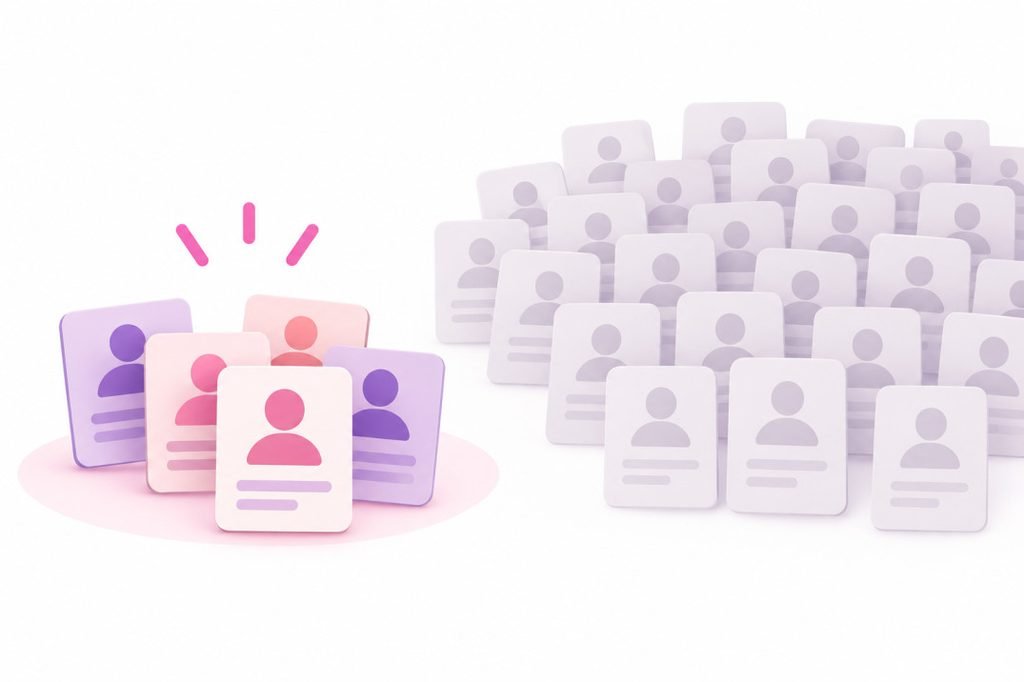
Segmentation is what turns a list into something more useful than a broadcast channel. A past customer should not always receive the same message as a brand-new lead. Someone who bought a roof replacement last month needs different communication from someone who requested an estimate and never booked. Even basic groups, customers, prospects, lapsed customers, service type, location, or last purchase, let you send fewer messages that are more relevant.
What Kinds of Emails Actually Work for Small Businesses?
The useful emails are usually tied to a real customer moment rather than a fixed newsletter schedule. A welcome email after someone subscribes, an appointment reminder, a seasonal maintenance notice, a follow-up after an estimate, a reactivation email to an inactive customer, or a request for feedback after completed work all have a clear reason to exist.
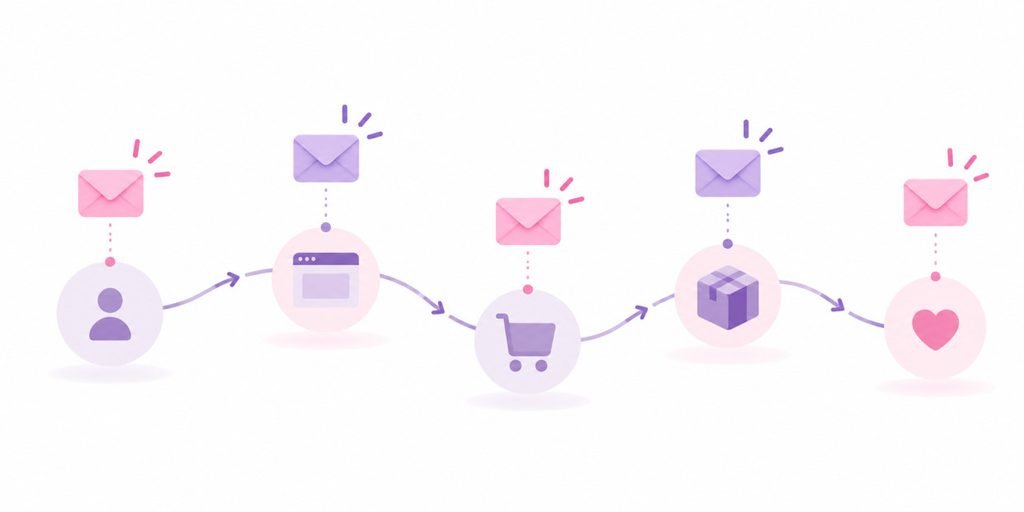
Automated emails are particularly useful because they are triggered by behavior instead of someone remembering to send them manually. A lead can receive a confirmation after submitting a form. A customer can receive a reminder before a recurring service is due. Someone who has not purchased in a while can receive a win-back message. The automation saves time, but the message still needs to feel relevant and human.
Newsletters can work too, but only when there is something worth opening. Sending one every Tuesday because the calendar says Tuesday is not a strategy. Useful updates, new services, seasonal advice, real project examples, short educational content, or a timely offer give the reader a reason to stay subscribed. The same principle applies to review requests: email can be a practical delivery channel for a neutral review request after a genuine customer interaction, and our guide on getting more Google reviews covers the policy side of that process.
What Should You Measure Besides Open Rate?
Open rate is no longer a reliable scoreboard by itself. Privacy features in modern email clients can preload images or otherwise make an email appear opened even when the recipient did not intentionally read it. That does not make open rate useless, but it makes it a directional signal rather than proof that a campaign worked.
Clicks are more useful when the email has a clear action, but even clicks are only an intermediate step. The business metrics are what happened afterward: replies, booked appointments, purchases, quote requests, returning customers, and revenue that can reasonably be traced back to the email program. For a small business, those outcomes matter far more than whether an email platform reports a 32% or 38% open rate.
Benchmarks can still provide context. Mailchimp’s current published benchmark data, based on campaigns sent to at least 1,000 subscribers, reports an average open rate of 35.63%, click rate of 2.62%, and unsubscribe rate of 0.22% across all users. Those numbers describe Mailchimp campaigns that met its dataset criteria, not a universal target for every small business. A smaller local list may behave very differently, and a campaign that produces three high-value appointments can be successful even if its click rate looks unimpressive beside an industry average.
How Do Deliverability and Compliance Affect Whether Email Works?
An email only works if it reaches the inbox. Deliverability depends on list quality, sending behavior, domain authentication, complaint rates, and whether recipients can easily stop receiving messages. Google now requires all senders to Gmail addresses to meet baseline sender requirements, and senders at roughly 5,000 or more messages per day to personal Gmail accounts face additional authentication and one-click unsubscribe requirements under Google’s email sender guidelines.
For most small businesses, the lesson is simpler than the technical checklist: send from your own properly configured domain, use a reputable email platform, avoid purchased lists, remove invalid addresses, make unsubscribing easy, and do not keep sending to people who clearly do not want the messages. If your volume grows, SPF, DKIM, DMARC, complaint monitoring, and sender reputation become operational issues rather than technical trivia.
Commercial email also has legal requirements. The FTC’s CAN-SPAM compliance guidance applies to commercial messages, including many business-to-business messages, and requires accurate header information and subject lines, a valid physical postal address, a clear opt-out method, and honoring opt-out requests. CAN-SPAM is only one layer; other privacy and marketing laws can apply depending on where your recipients are located, so businesses sending beyond a simple local list should confirm the rules that apply to them rather than assuming one federal law covers everything.
Is Email Marketing Worth It for Every Small Business?
No. Email is most useful when the business has people worth staying in touch with and a reason to contact them again. That includes businesses with repeat purchases, recurring services, longer consideration periods, seasonal needs, memberships, appointments, or customer relationships that continue after the first transaction.
It is less compelling when customers almost never buy twice, the business has no legitimate list and no practical way to build one, or the team cannot maintain even a simple sending rhythm. In those cases, improving acquisition, lead handling, or customer data may deserve attention first. Email does not create value just because software makes sending easy.
The right test is not whether email is “still alive.” It is whether your business has a useful audience, relevant reasons to contact them, and a way to connect those messages to real outcomes. If those pieces exist, email remains one of the simplest ways to stay in front of people who already know you without paying for every impression again.
Frequently Asked Questions
Q: Is email marketing outdated in 2026? A: No. Email is still widely used for customer communication, lead nurturing, reminders, promotions, and retention. What has changed is the standard for doing it well: bought lists, generic blasts, and open-rate obsession are less useful, while permission, segmentation, automation, deliverability, and business-outcome tracking matter more.
Q: How often should a small business send marketing emails? A: There is no universal schedule. Send when you have a useful reason to contact the audience and can maintain that rhythm consistently. A monthly newsletter may be enough for one business, while appointment-driven or e-commerce businesses may use several automated messages around specific customer actions. Relevance matters more than frequency by itself.
Q: How big does my email list need to be before email marketing is worth it? A: There is no minimum size. A small list of real customers and qualified prospects can be valuable if the messages lead to repeat business, appointments, or referrals. List quality and customer value matter more than hitting an arbitrary subscriber count.
Q: Should I buy an email list to grow faster? A: Generally, no. Purchased lists contain people who did not deliberately subscribe to your business, which can lead to poor engagement, spam complaints, weak deliverability, and compliance problems. Build the list through genuine customer interactions and clear opt-in opportunities instead.
Q: Is email better than SMS marketing? A: They serve different purposes. Email gives you more room for explanation, education, longer offers, and content people can return to later. SMS is better suited to short, immediate messages where speed matters. Many businesses use both, but the right mix depends on consent, urgency, message type, and how customers prefer to communicate. We will cover SMS marketing separately after this article.
Keep the Audience You Already Earned
If your business is already generating leads and customers but rarely follows up with them after the first interaction, email may be one of the simplest gaps to fix. NextEra Marketing can help you look at where email fits alongside your advertising, website, follow-up, and customer journey so the messages serve a real business purpose rather than becoming another task on the calendar. A conversation, not a pitch.