
Quick Answer
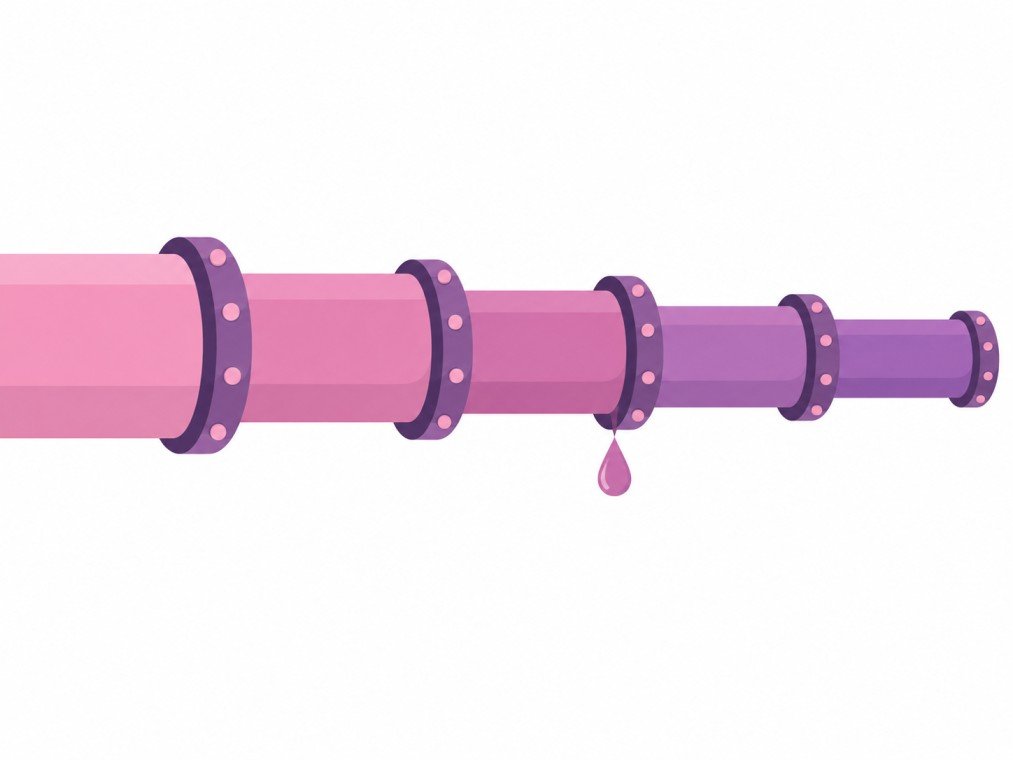
Usually because one specific stage of your funnel is leaking, not because advertising does not work. Trace the path in order: impressions to clicks, clicks to landing-page actions, actions to leads, leads to qualified leads, and qualified leads to customers. Each stage has its own evidence and likely causes, from message mismatch to broken tracking to slow follow-up. Find the breaking stage before changing budgets, rebuilding, or pausing.
How Can You Tell Where Your Ad Funnel Is Breaking?
Walk the funnel stage by stage and let the numbers point, without letting any single metric convict. If ads get impressions but few clicks, the evidence points toward the ad, the audience, or the search terms you are matching, though low click-through can also simply reflect a competitive auction or a research-heavy query. If clicks are healthy but few people take action on the page, suspects include the landing page, but also the traffic quality, the offer, pricing expectations, technical problems like broken buttons or slow mobile load, and tracking that is not recording actions that actually happened. If actions become leads but leads never become customers, the problem may be further down the funnel, in lead quality or lead handling.
Two habits make this diagnosis honest. First, compare each stage against your own history, the same campaign in earlier months, rather than a universal “good” number; published benchmarks describe what other advertisers experienced in specific datasets, not targets for your account (our guides on what Google Ads cost and Facebook Ads cost carry the current scoped figures). Second, verify the measurement before trusting the metric, because the most expensive misdiagnosis in advertising is fixing a stage that was never broken while the real leak keeps draining spend.
Why Do People Click Your Ads but Never Call or Book?
When clicks are real but actions are rare, start with message match: does the page deliver what the ad promised? An ad about same-day service that lands on a generic homepage, a promotion the page never mentions, or a service the page buries makes visitors feel misdirected, and misdirected visitors leave. From there, work through practical checks rather than design dogma: on a phone, can a visitor understand the offer, see evidence you are legitimate, and take the next step without hunting? Does the form ask more than it needs? Do buttons and click-to-call actually work on mobile? Is the page fast enough that people see it at all?
Not every miss is a page problem, though. If the traffic itself is wrong, covered next, the best page cannot convert it; if your pricing or offer is out of step with the market, visitors may understand you perfectly and still decline; and if tracking is broken, the page may be converting while your reports say otherwise. One Google-documented note worth knowing for search campaigns: landing page experience is one of the three components of Google’s Quality Score, alongside expected clickthrough rate and ad relevance, and Google describes Quality Score as a diagnostic tool rather than an input in the ad auction. Treat it the way Google does: a signal for where to look, not a lever that mechanically changes your costs.
Is Your Targeting Bringing In the Wrong People?
For search campaigns, the evidence is written down for you. Pull the search terms report and read what people actually typed before clicking: service businesses routinely find spend going to job seekers, do-it-yourselfers, searches for services they do not offer, and locations they do not serve. The fixes are unglamorous: add negative keywords regularly, keep geographic targeting aligned to where you actually work, and keep job types and services accurate. This is search-specific advice; keywords and search terms are how search advertising works.

Paid social needs its own diagnostic questions, because there is no search term to read. Ask instead: is the audience appropriate for what you sell, and is the campaign reaching people likely to care about the offer? Is the creative giving people a reason to stop and act, and has it gone stale? Does the offer make sense for someone who was not looking for you five seconds ago? Are placements showing your ad somewhere it makes sense? And, critically, is the campaign’s conversion objective set to the action you actually want, since, as we covered in our AI advertising guide, automated systems optimize toward the conversion goals and signals you provide? A social campaign “not converting” is often a campaign faithfully optimizing toward the wrong definition of conversion.
Is Your Tracking Telling You the Truth?
Before concluding that ads are failing, audit whether the scoreboard works, because tracking failures come in different flavors with different consequences. Sometimes conversions happen but are never recorded: calls from ads go uncounted, forms submit without firing a conversion, and a working campaign looks dead. Sometimes the wrong action is counted: page views or button clicks recorded as “leads” make a failing campaign look healthy. Sometimes duplicates inflate the numbers, one submission counted three times. Sometimes low-value actions, newsletter signups, spam form fills, are treated as if they were customers. And sometimes the platform’s attribution simply disagrees with your CRM or your books, each measuring by different rules.

These failures do different damage. Missing and miscounted conversions distort your judgment about what is working, and, since platforms optimize toward the conversion signals you provide, feeding automated bidding an incomplete or misdefined signal can also steer delivery toward outcomes that do not reflect real business value. The audit is straightforward: submit a test lead and confirm it appears in your reporting, call the tracking number and check it counts, review what each “conversion” action actually is, and reconcile a month of platform-reported conversions against your CRM and calendar. Keeping that measurement honest is standing work inside NextEra’s managed ad accounts, because every downstream decision depends on it.
Are Your Conversions Becoming Customers?
An advertising conversion is not a customer, and for lead-generation businesses this distinction decides where to look next. A form fill or phone call is the traffic-to-conversion half working. Whether that contact becomes a qualified lead and then a paying customer is the second half, and it can fail on its own: calls that ring out, forms answered days later, no booking path, quotes that never get followed up, or leads that were never a fit for what you sell. When ads produce contacts that do not become revenue, ask which half broke: if contacts are scarce, work the earlier stages; if contacts are plentiful but customers are not, the fix lives in lead qualification and handling, not in the ad account. Missed calls, inconsistent follow-up, and friction in booking can make successful lead generation look like unsuccessful advertising, which is exactly the gap NextEra’s Never Miss a Lead system exists to close.
Only after this whole walk does the budget question deserve attention, and that is a planning exercise of its own; our guide on how much a small business should spend on advertising covers it. Diagnosis first is how NextEra Marketing, a full-service, women-owned agency based in the Oklahoma City metro, approaches every underperforming account, because more spend on an undiagnosed leak just buys a bigger leak.
Frequently Asked Questions
Q: What’s a good conversion rate for ads? A: One that produces customers at a cost your margins support, which varies enormously by industry, platform, offer, and what you count as a conversion. Published benchmarks describe medians for specific datasets and time windows and are useful context, not targets. The more useful comparisons are your own campaign’s history and your own economics: what a customer is worth and what you can afford to pay for one.
Q: Why am I getting clicks but no calls or sales? A: Work through the possibilities in order: the page may not match the ad’s promise or work well on mobile, the traffic may be the wrong people, the offer or pricing may not fit the market, a technical problem may be blocking the action, or tracking may be missing conversions that are actually happening. Each has different evidence, so check message match, search terms, mobile function, and tracking before concluding the ads failed.
Q: Should I pause ads that aren’t converting? A: Not as a first move. First verify tracking is recording real results, the campaign has enough data to judge, the traffic is relevant, and leads are not arriving somewhere unrecorded, and check for landing-page or technical problems. If the campaign genuinely cannot justify continued spend after that review, pausing or reallocating is a sound, evidence-based decision. Pausing on a broken scoreboard is how good campaigns get killed.
Q: Do I need a new landing page or a whole new website? A: Diagnose before rebuilding. Often the fix is narrower: matching the page’s message to the ad, improving mobile usability, shortening a form, fixing a technical fault, repairing tracking, or building one dedicated landing page for one campaign. A full website rebuild is a real answer when the evidence points there, deep structural problems across pages, but it should be the conclusion of a diagnosis, not the reflex.
Q: How do I know if my conversion tracking is working? A: Test it like a customer. Submit a form and confirm the conversion appears in your ad platform; call your tracked number and check it registers; review each conversion action to confirm it represents something you actually value; and reconcile a month of platform-reported conversions against your CRM, calendar, or sales records. Gaps between what happened and what was recorded are your answer.
Find the Leak Before You Spend Another Dollar
If your ads are spending money and your phone is not ringing enough, there are clues in that funnel that can help show where performance is breaking down. Reach out to NextEra Marketing and we will walk the diagnosis with you, from the ad account to the follow-up. Bring the symptoms; we will help find the leak.