

Quick Answer
A landing page is the page someone reaches after clicking an ad, email, or other link. In marketing, it often means a focused page built around one offer and one next step, such as requesting a quote or booking an appointment. Your small business does not automatically need a separate landing page. You need a clear, relevant destination that makes it easy for the right visitor to act.
What Is a Landing Page, and How Is It Different From a Homepage?
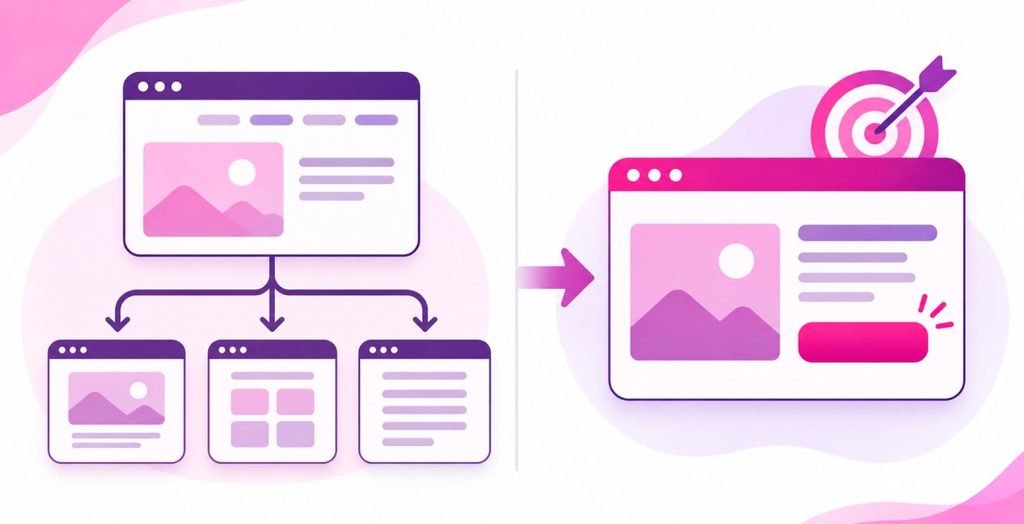
A homepage introduces your business. It typically explains who you are, lists services, and offers several paths to explore. A campaign landing page has a narrower job: help a visitor decide what to do about the specific offer that brought them there.
Technically, any page a person arrives on can be a landing page. Google Ads defines it as the webpage reached after someone clicks an ad. Marketers often use the term for a dedicated campaign page, but the destination could be an existing service page if it answers the visitor’s question and makes the next step obvious.
Think about a plumbing company advertising water-heater repairs. Sending that click to a general homepage makes the visitor search again. Sending it to a water-heater service page with clear service details and an easy booking or call option brings the visitor closer to what they wanted. The goal is relevance, not creating an extra page for its own sake.
When Should a Small Business Create a Dedicated Landing Page?
A dedicated page is most useful when you are promoting something specific that your existing website does not explain well. Examples include a seasonal service, a limited-time offer, a consultation campaign, a new location, or a downloadable guide. The page can speak directly to that audience without asking people to sort through unrelated services.
Consider building one when:
Your ad highlights a single service or offer that is hard to find on your current site.
Different campaigns need different messages, proof, or contact options.
You want to measure inquiries from one promotion more clearly.
Your homepage offers too many choices for visitors who are ready to request a quote or book.
You may not need one if a strong existing service page already matches the ad, loads well on mobile, answers the main questions, and provides a working way to contact you. This is particularly true for smaller budgets. Fixing the current page may be a better first investment than commissioning another design.
What Should a Landing Page Include to Generate Qualified Leads?
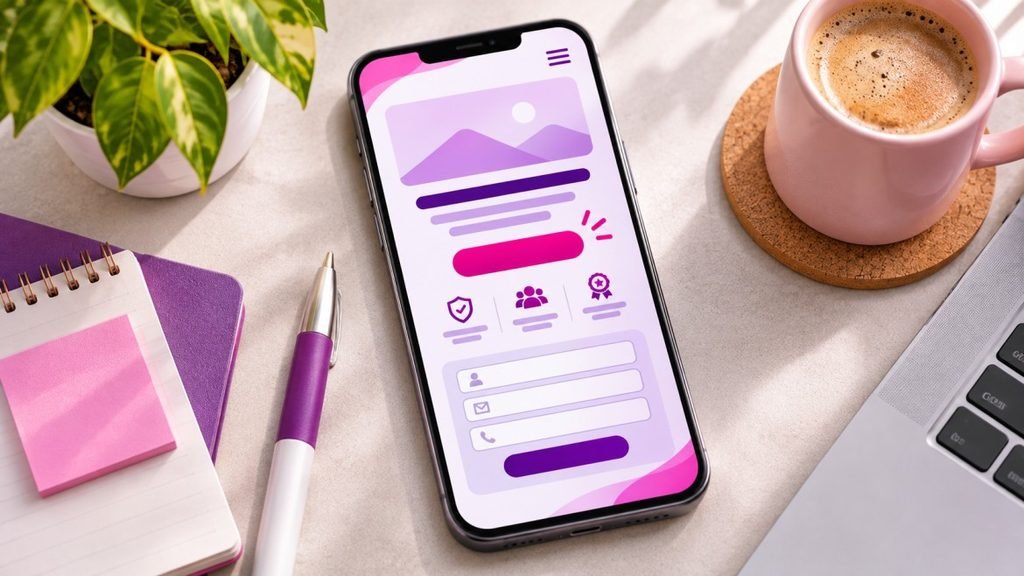
Start with the customer’s question: “Am I in the right place, and what happens next?” A useful page should make the answer obvious without forcing visitors to read a wall of copy.
A specific headline that matches the campaign. If the ad promises roof repair, the page should not suddenly talk only about full replacements.
A concise explanation of the service, who it is for, and the area served, without making claims the business cannot support.
Credible proof, such as genuine project examples, applicable credentials, or authentic reviews, where available and used with permission.
One clear primary action, such as “Request an Estimate” or “Book a Consultation,” repeated where it helps on longer pages.
A mobile-friendly form or click-to-call option that actually works, with only the information needed to respond.
Google’s landing-page guidance emphasizes matching the ad’s promise, making pages easy to navigate, and offering useful content. A short page is not automatically better than a long one. Complex services may require pricing context, process details, FAQs, or examples before someone feels comfortable reaching out.
Do not hide important terms or invent urgency. If an offer has requirements or exclusions, explain them. If visitors share personal information, make it clear how the business will use that information and link to the applicable privacy notice. Clarity builds confidence before the first conversation.
Can You Use an Existing Service Page Instead of Building a New One?
Yes. A well-written service page can serve as a landing page for an ad, an email, a social post, or even a search result. You do not need a special platform, a separate domain, or a page with every navigation link removed.
Use an existing page when it closely matches the campaign and supports the next step. Create a focused variation when the offer, audience, or booking path is meaningfully different. Keep the business identity and contact details consistent so people recognize whom they are contacting.
If your broader site is missing important services or the layout makes basic information hard to find, first consider whether you need better site structure rather than many nearly identical campaign pages. Our website cost guide explains how page count, content, and custom functionality affect the scope of a build. And our guide to why ads are not converting walks through other possible problems when paid clicks are not becoming inquiries.
How Do You Measure Whether a Landing Page Is Working?
Decide what success means before publishing. For a local service business, that might be a submitted estimate request, a qualified phone call, or an appointment booking. Page views and button clicks are useful clues, but they are not the same as new customers.
At a basic level, landing-page conversion rate is the number of measured desired actions divided by visits, using a consistent definition for both. For example, 12 valid form submissions from 300 visits is a 4% form-submission rate. That number alone does not tell you whether the leads were qualified, became customers, or justified the campaign cost.
Track the complete path: where the visitor came from, which page they saw, what action they completed, and what happened after the inquiry. Google Analytics’ recommended lead event, generate_lead, can be configured for lead actions such as form submissions. Verify that your actual form, phone, and booking events are recorded correctly rather than assuming the setup works.
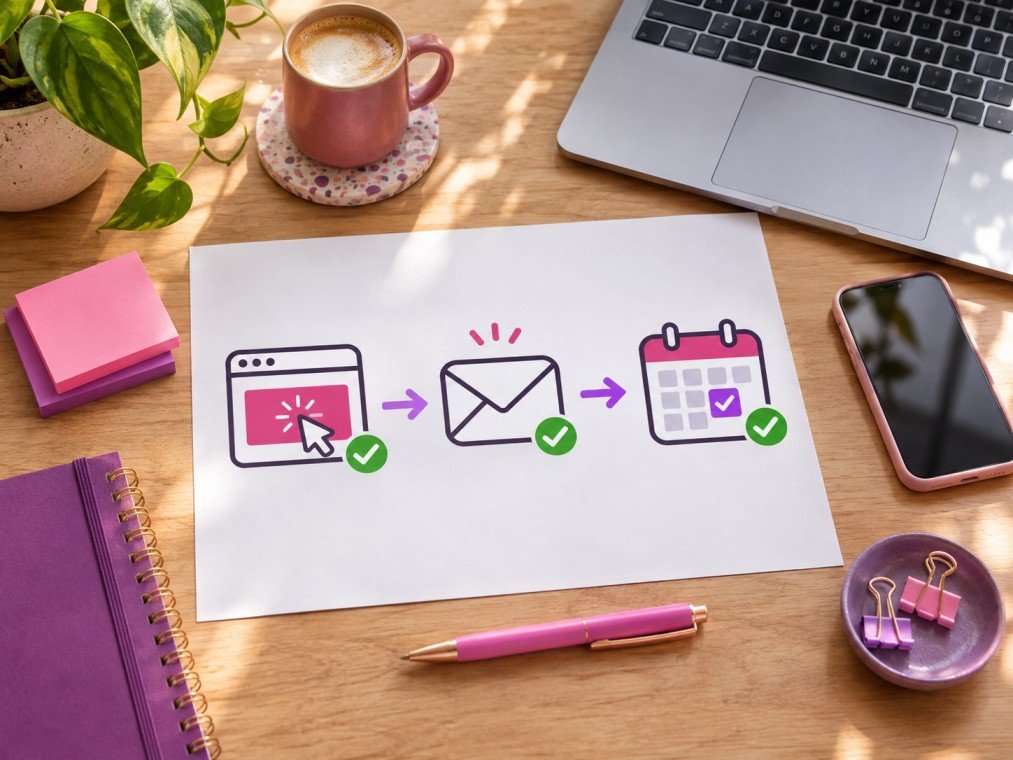
Then compare results with the same campaign over time. If many people visit but few contact you, test whether the headline, offer, mobile experience, or form is creating friction. If inquiries are plentiful but bookings are low, check lead quality and follow-up. Our CRM guide explains why a consistent customer record helps connect the initial inquiry to the final outcome.
NextEra’s Take: Is a Dedicated Landing Page Worth It?
A landing page is worth building when it gives a specific audience a clearer path to a meaningful action. It is not worth paying for just because every campaign seems to have one. We would first ask: What does the visitor expect, what decision must the page support, and what happens after someone reaches out?
For a business testing one straightforward offer, improving the existing page may be the sensible move. For a business running distinct campaigns across services or locations, focused pages may make the message and measurement easier to manage. Either way, the ad, page, contact method, and follow-up need to work as one system. That is the kind of connection NextEra Marketing helps businesses plan, rather than treating each new page as an isolated project.
Frequently Asked Questions
Q: Is a landing page the same as a website?
A: No. A website can contain many pages that explain a business and its services. A landing page is a destination within that experience, often designed around a particular visitor goal or campaign. It may live on your existing website.
Q: Do I need a landing page to run Google Ads?
A: You need an appropriate destination URL, but it does not have to be a newly built page. A relevant service page may work. The important part is that the destination fulfills the ad’s promise and follows the platform’s applicable policies.
Q: Should I send paid ads to my homepage?
A: Sometimes, especially for broad brand campaigns. For ads about a specific product, service, or offer, a closely matched service or campaign page is usually a better starting point because visitors can find what they clicked for more quickly.
Q: Does every service or location need its own landing page?
A: Not automatically. Create a separate page when the customer need, offer, details, or conversion path warrants it. Avoid publishing near-duplicate pages that provide little unique value. Start with the pages your campaigns and customers genuinely need.
Q: What is a good landing-page conversion rate?
A: There is no single trustworthy rate for every business. It depends on traffic quality, industry, offer, device, and what counts as a conversion. Compare against your own past performance, then check whether those conversions turn into qualified leads and customers.
Make the Click Worth Something
Your landing page does not need to impress another marketer. It needs to help a real customer understand the offer, trust the business, and take the next step. Start with the simplest page that does that job, measure real outcomes, and improve from there.