
Quick Answer
SEO helps your business earn visibility in unpaid search results, while Google Ads lets you compete for paid placements when people search. Neither is automatically better. Google Ads may suit a business that needs to test demand or promote a time-sensitive service; SEO is useful for making your site easier to find and understand over time. The right choice depends on your goals, budget, website, competition, and ability to turn inquiries into customers.
What Is the Difference Between SEO and Google Ads?
Imagine someone searching for an emergency plumber. The search results might include ads labeled as sponsored placements, organic website results, and a local map section. SEO and Google Ads are different ways of appearing in that experience.
Search engine optimization, or SEO, is the work of helping search engines discover and understand useful website pages while giving visitors helpful answers. That can include improving service pages, fixing technical issues, writing relevant content, and making your website easier to navigate. Google’s SEO Starter Guide explains that these changes can improve search visibility, but it does not promise a first-place ranking.
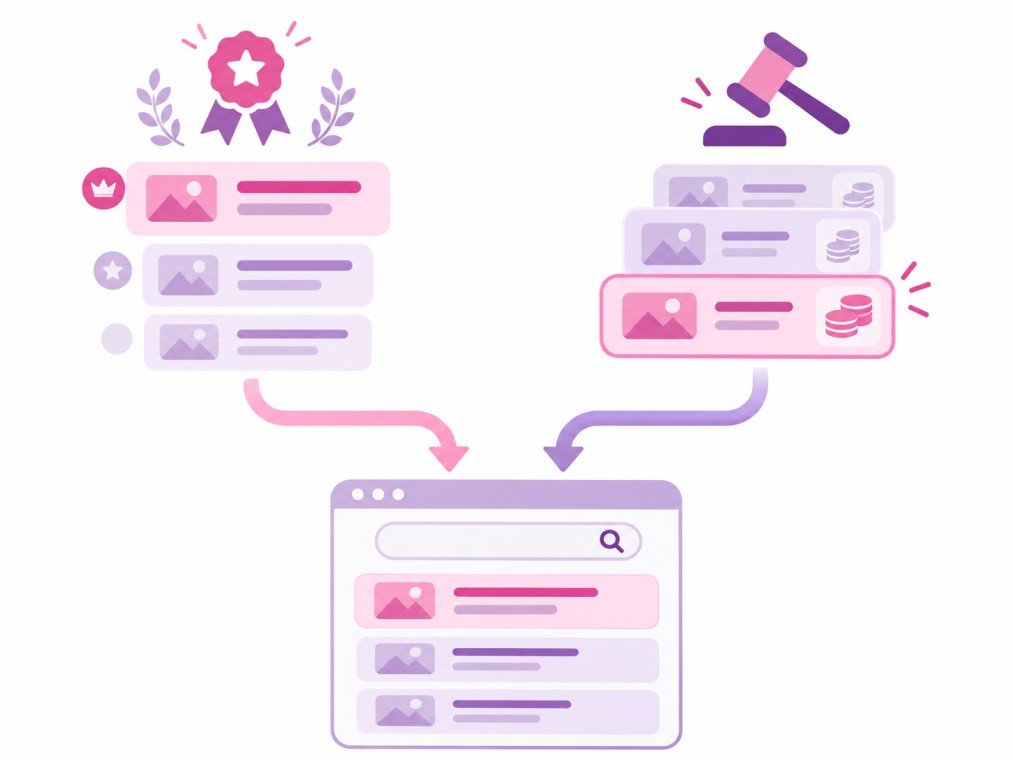
Google Ads is an advertising platform. In a Search campaign, eligible ads enter an auction when someone searches. Your targeting, bid, ad quality, and the context of the search help determine whether and where an ad can appear. You pay advertising costs according to your campaign settings, and visibility depends on the auction rather than on earning an unpaid ranking.
Here is an important distinction: buying Google Ads does not improve your organic Google ranking. Google explicitly separates paid advertising from unpaid results. A business can invest in both, but one does not purchase placement in the other.
Which Works Faster, SEO or Google Ads?
Google Ads can generally start testing demand sooner once a campaign is approved and serving. That does not mean leads arrive immediately or that every click will be useful. Ads still need relevant search terms, appropriate locations, realistic budgets, and a page that matches the visitor’s intent. The auction can also limit when your ads appear.
SEO usually requires more patience. Some website changes can be reflected in Search quickly; others can take weeks or months. Google’s guidance specifically warns that improvements do not guarantee noticeable ranking gains. A new service page may need time to be discovered, indexed, and evaluated, and local competitors may already have established visibility.
For example, a roofing contractor promoting a specific repair service next week might test paid search while improving its repair page. A dental practice that wants a reliable explanation of all its treatments should not neglect those pages just because ads can launch sooner.
Think of speed as a decision factor, not a winner. If you need inquiries now, paid search may deserve an early test. If you want to strengthen how customers find your services over the long term, make SEO part of the plan even if paid campaigns are running.
How Much Do SEO and Google Ads Cost?
SEO is not necessarily free. Organic clicks do not have a Google Ads cost per click, but your business still invests in strategy, writing, website updates, technical maintenance, local information, and measurement. Doing it yourself uses staff time; hiring an agency adds a service cost. The scope varies widely by the current condition of your website and the competition.
Google Ads introduces a separate media budget in addition to any management, creative, or landing-page costs. Google lets advertisers set budgets, but the number of clicks or leads those budgets can support depends on the auctions and campaign setup. A small budget in a highly competitive service category may produce too little data for confident decisions.

Our guide to how much Google Ads cost explains why one company’s cost per click may look nothing like another’s. For either channel, compare investment against qualified inquiries and acquired customers, not just website visits.
Avoid treating SEO as a one-time purchase or Ads as a guaranteed lead machine. Both require someone to watch performance, fix problems, and improve the experience after a person clicks.
When Should a Small Business Choose SEO First?
SEO may deserve priority when your core service pages are incomplete, your site has serious crawl or usability issues, or customers cannot find clear answers about what you do and where you operate. Those problems affect the visitor experience whether someone arrives from an ad or an unpaid result.
- Your website does not clearly describe important services, locations, or customer questions.
- You want to build useful, reusable content around recurring customer needs rather than a short promotion.
- You have time to improve the site steadily and measure progress over multiple reporting periods.
- Your Google Business Profile and local website information need attention before you invest in more traffic.
A home-services company with confusing service pages may benefit more from fixing the site than from immediately increasing ad spend. A clear page can support both organic visitors and paid traffic later. If local visibility is a priority, our Google Business Profile optimization guide covers the profile side of that work.
SEO also connects to answer engine optimization, or AEO. Helpful, well-organized content can make your business easier for search systems and readers to understand, but there is no guaranteed way to make an AI assistant cite or recommend you. Our AEO guide explains the distinction without treating AI visibility as a shortcut around foundational SEO.
When Should a Small Business Choose Google Ads First?
Google Ads can be a reasonable first move when you have a clearly defined offer, a working page or booking process, and enough budget to test a specific audience or service. It can also help you evaluate whether a proposed service attracts inquiries before you invest in extensive supporting content.
- You need to promote a time-sensitive service, new offering, or defined seasonal campaign.
- Your business can answer calls and follow up with inquiries promptly.
- Your service page already explains the offer and provides a reliable way to contact you.
- You can track qualified leads and learn from results rather than judging the campaign only by clicks.
That last point matters. If an ad brings people to a confusing homepage or a broken form, more spending may only produce more frustration. Our article on why ads are not converting walks through issues such as message mismatch, weak landing pages, tracking gaps, and poor lead follow-up.
Paid search may also be a poor early investment when your budget cannot support a useful test, your team is not ready for leads, or the website makes essential claims without proof. Fixing those basics first often gives you a better foundation for future campaigns.
Should You Use SEO and Google Ads Together?
Often, yes, if your resources allow it and each channel has a clear job. SEO can strengthen service information and the broader website experience. Ads can support selected campaigns or test search intent while those improvements continue. The same well-designed page can sometimes serve both audiences.
Keep their reporting separate. Organic rankings are not ad placements, and an ad click is not an organic visit. Look at qualified calls, completed forms, bookings, and actual customers by source where your tracking can reliably attribute them. Do not add channel totals together without checking for duplication or attribution gaps.

A practical approach is to choose a small group of priority services. Build or improve useful pages for them, then test ads only where the budget and customer demand justify it. Review the quality of inquiries, not just volume, before expanding.
NextEra’s Take: Which Should You Invest in First?
We would not recommend one channel for every business. If your website is difficult to use or does not explain your services, start by fixing that foundation. If the site is ready and you need to test a defined offer, consider Google Ads. If your business relies on recurring local searches and has room to build visibility over time, keep investing in SEO even when campaigns are active.
For a new business with limited resources, the question is not “Which one wins?” It is “What is our biggest obstacle to getting the next qualified customer?” Sometimes that obstacle is visibility. Sometimes people click but never call. Sometimes the calls come in and no one follows up. NextEra helps businesses connect the marketing channel to the website, lead handling, and measurement so the plan is built around outcomes rather than fashionable tactics.
Frequently Asked Questions
Q: Is SEO better than Google Ads for long-term growth?
A: SEO is well suited to ongoing improvements in unpaid visibility, but rankings and traffic are not guaranteed. Google Ads can also remain useful long-term when campaigns consistently bring in profitable customers. The best mix depends on what you can measure and maintain.
Q: Do Google Ads help my website rank higher organically?
A: No. Google states that buying ads does not change your site’s position in unpaid search results. Paid placements and organic rankings use separate systems.
Q: Can I run Google Ads without doing SEO?
A: Yes, but you still need a relevant, trustworthy destination that works on mobile. SEO and paid search are separate activities, yet many website improvements make the experience better for both kinds of visitors.
Q: Is SEO free if I do not pay for advertising?
A: Organic search clicks do not carry a Google Ads click fee, but SEO work still takes staff time, content, technical maintenance, and sometimes agency support. Compare total effort and cost, not just media spend.
Q: How do I know when to spend more on SEO or Google Ads?
A: Check qualified leads, acquired customers, cost, and capacity. Invest more where evidence supports it, while correcting weak service pages or follow-up problems that affect both channels. Avoid changing the entire plan after only a few days of incomplete data.
Choose the Channel That Solves the Actual Problem
SEO and Google Ads are not competing answers to every marketing question. Start with what the customer is searching for, whether your website helps them act, and what a new customer is worth to your business. Then choose the channel, or combination, that you can afford to test and improve.